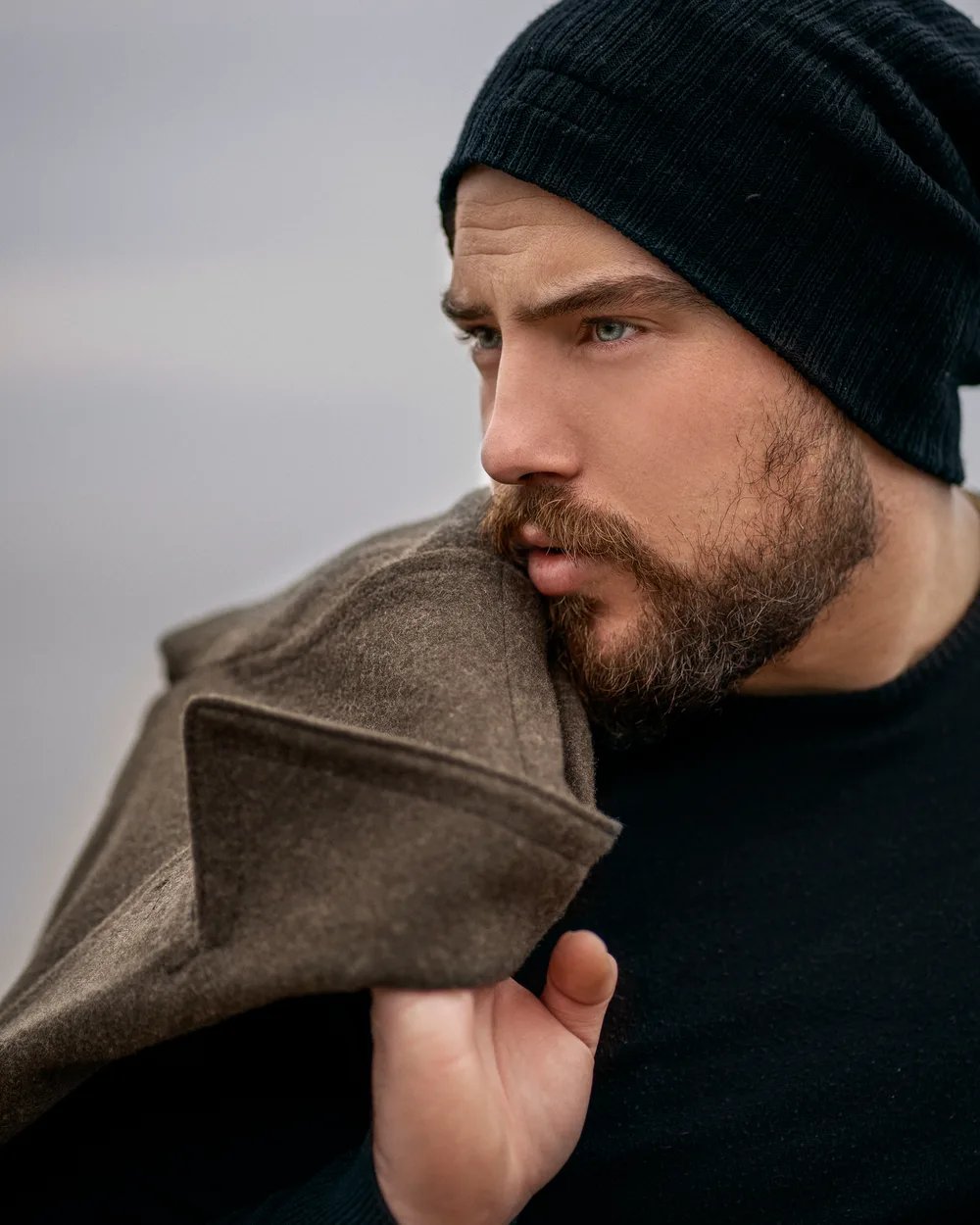
Every practice has a shape, even if it's only visible in hindsight. Mine starts in 2017 — not with one decisive image, but with a run of work under titles like Sunset, Directly from Camera, Golden Eye, Expressive Sensuality, Spring! — pieces that still sit in an old professional profile, each one a record of what I was testing at the time rather than a portfolio built to impress a client.
Where it started
One of those early pieces, from 2017, still carries its full metadata: shot on a Nikon D800E. I'm not going to reconstruct exact settings I don't have in front of me — that's not the point of mentioning it. What the metadata actually shows is a working method already forming: deliberate, recorded, repeatable. Not a hobbyist's lucky frame.
Portrait before fashion
Portrait came first, and I think that order matters. You learn a face — its structure, its asymmetries, what light does to skin at different angles — before you learn how to dress a set around it. Fashion photography without that foundation tends to read as styling with a person standing in it, rather than a photograph of a person.
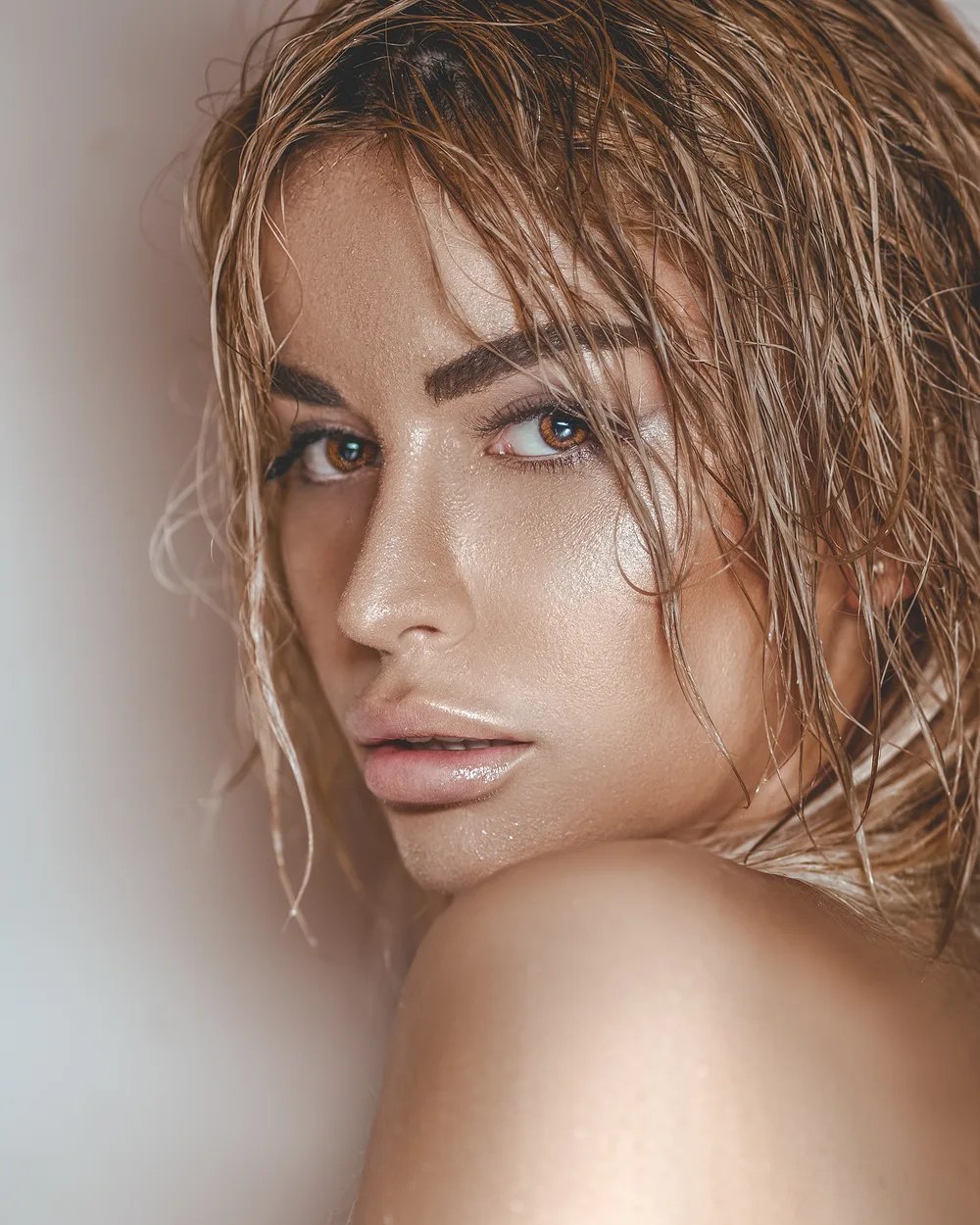
Beauty, fashion, and the fine-art exception
Beauty work is unforgiving in a specific way: there's nowhere for a lighting mistake to hide when the subject is the light's target. It taught me a precision — in retouch restraint, in skin tone — that carried into the fashion work after it, where the frame stopped being about one person and started being about a story: styling, location, a team, a concept that has to survive contact with weather, schedule and budget. And titles like Golden Eye, Expressive Sensuality, Spring! don't belong to any client brief — they're where the commercial discipline gets set aside for something more exploratory, and, looking back, often where the instincts that later shaped the commercial work were actually formed.
Where it was heading
The move toward film and directing wasn't a break from any of this — it was a continuation. Composing a frame that has to hold for a thirtieth of a second is a different problem from composing one that has to hold and move for four minutes, but it's the same eye asking it.
This isn't a CV. It's an account of one fixation — light, a face, a frame worth holding — followed across mediums until it stopped fitting inside a single one.